Menselijke invloed op veengebieden
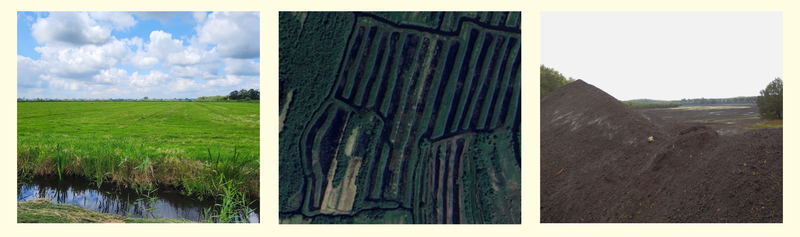
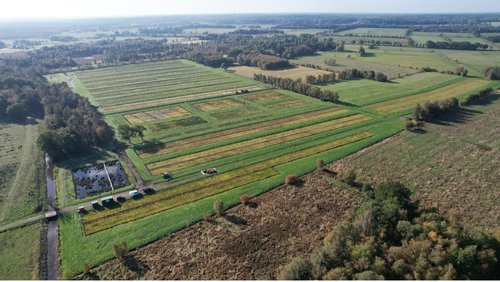
Mensen leven al duizenden jaren met en in venen. Echter, grootschalig en industrieel gebruik in de afgelopen eeuwen heeft grote effecten gehad op veengebieden [2]. Wereldwijd zijn 12% (circa 57 miljoen hectare) van de venen aangetast, dat staat gelijk aan 14 keer de oppervlakte van Nederland (0.3% landoppervlak). Deze aantasting is verantwoordelijk voor 4-5% van de menselijk-veroorzaakte wereldwijde CO₂ uitstoot [3,4]. In Nederland zijn 3.800 km2 venen aangetast, wat een gebied is groter dan de provincie Overijssel [5]. Mensen ontwateren venen voor land- of bosbouw (Figuur 2), woongebied (bijvoorbeeld Gouda en Amsterdam) of graven venen af voor potgrond of brandstof (turf, Figuur 3 en 4).
Ontwateren van veengebieden
Het ontwateren van veengebieden gebeurt door het verlagen van de grondwaterstand door het graven van sloten en het afvoeren van water (Figuur 2). Door het verlagen van de grondwaterstand en daarmee het inbrengen van zuurstof in de veenlaag breekt het opgehoopte materiaal langzaam af. Denk wederom aan een pot augurken zonder water. Het ontwateren van venen leidt tot CO₂-uitstoot . Een ontwaterd veen dat voor landbouw wordt gebruikt stoot 29 ton CO₂ equivalenten per hectare per jaar uit [6]. Dit komt neer op het rijden van 145.000 km met een gemiddelde benzine auto [7]. Daarnaast leidt ontwatering tot bodemdaling door inklinking en afbraak: de organische stof wordt namelijk omgezet in gas. De snelheid waarmee het land zakt verschilt per gebied, maar kan met een centimeter per jaar gaan. Dit proces kan dus eeuwen doorgaan als de veenlaag meters dik is.
Afgraven van venen
Het afgraven van venen kent een lange geschiedenis en begon kleinschalig rond 1200 voor het winnen van zout, dat door overstromingen in kustveen terecht was gekomen. De ontginningen werden grootschalig in de 16e eeuw met ontwatering en daarna het afgraven voor turf (brandstof) of door baggeren. Dit baggeren resulteerde in karakteristieke petgaten (waar veen gewonnen werd) en legakker structuren (waar veen ten droge werd gelegd, Figuur 3). In 1960 is de turfwinning in Nederland gestopt, maar elders in Europa en in vele andere landen gaat het afgraven van venen door (Figuur 4).

![Schematische weergave hoe CO2 opname door mossen en planten in combinatie met natte omstandigheden kan leiden tot veenvorming. Aangepast van [11] door Thomas Hartman.](https://minio-server-7ydy.onrender.com/khshowcase/media/images/Figuur_1.width-800.png)