2. Kies voor betere materialen
Er is geen consensus over wat het meest milieuvriendelijke materiaal voor textiel is. Dit is een complexe kwestie omdat de impact varieert per vezelbron en -grootte, de behandeling en de plannen die zijn gemaakt voor het einde van de levensduur van de kleding (zie bijvoorbeeld Van Der Velden et al., 2014) [4]. Enkele verontrustende feiten zijn dat het percentage op plastic gebaseerde vezels in kleding toeneemt [6] Ook wordt recyclen moeilijker doordat vezels steeds complexer worden omdat ze van verschillende materialen worden gemaakt. Bij het zoeken naar milieuvriendelijke materialen kun je daar rekening mee houden, bijvoorbeeld door een mix van natuurlijke en synthetische vezels te ontwijken. Er zijn allerlei labels en certificeringen voor veganistische, biologische en schonere materialen, die op basis van het doel van het label en de drager goed gebruikt kunnen worden.
Onderzoekers hebben kritiek op studies over verschillende vezeltypes die geen rekening houden met de levensduur van textiel. Wol heeft bijvoorbeeld een forse milieu-impact in verband met de CO₂ die schapen produceren, maar kleding kan generaties lang meegaan Hiermee wordt de productie van nieuwe materialen mogelijk vermeden [7].
3. Houd rekening met wasgewoonten
Voor vaak gewassen kleding (zoals katoenen T-shirts) is de milieu-impact van het wassen groter dan die van de productie [8]. Hoewel we gewend zijn om een breed scala aan "vuile kleding" in de wasmachine te stoppen, kunnen sommige materialen beter worden gereinigd door te luchten [9]. Mensen hebben de neiging om kleding te wassen om ze te "verfrissen", zelfs als de kleding eigenlijk nog schoon is. Dit doen ze zodat ze elke dag van outfit kunnen veranderen en voorkomen dat ze door anderen als anti-hygiënisch worden gezien. Vaak wassen kost echter veel energie en water. Het geeft daarnaast microvezels vrij, waarvan de meesten polyester bevatten en daarom achterblijven in rivieren, de zee en zelfs in de organen van dieren [10]. Vaak en intensief wassen maakt je kleding minder sexy doordat het materiaal snel verslechtert en de kleding er sneller oud uit komt te zien [11]. Hoge was temperaturen, lange wasprogramma's en drogen kun je het beste vermijden.
4. Kies de beste bestemming voor je kleding
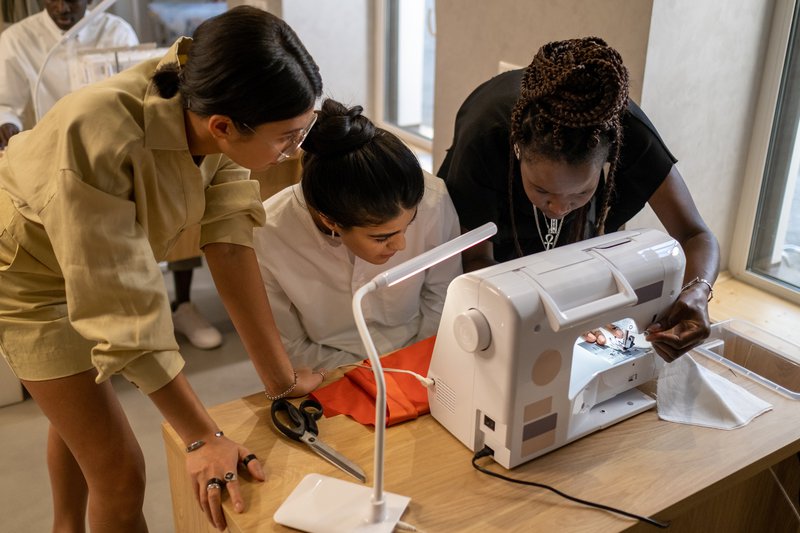
Het recyclen van textiel is erg moeilijk en heeft ook weer zijn eigen milieu-impact [12]. Tegenwoordig wordt het meeste weggegooide textiel dat voor recycling wordt verkocht, gebruikt als poetsdoek in industrieën of verwerkt tot opvulmateriaal in meubels en architectuur [13]. Nieuwe kleding bevat slechts een klein deel van gerecycled materiaal en daardoor is er nog steeds enorm veel nieuw textiel nodig. Het belangrijkste bij het kiezen voor een nieuwe bestemming van de kleding die je niet meer wilt hebben is dus om te bedenken waar nieuw materiaal kan worden bespaard. Kleding die jezelf niet meer vaak draagt kan je misschien het beste aanbieden aan anderen die er baat bij hebben. Je oude kleding kan je verwerken tot poetsdoek, zodat er geen nieuwe poetsdoekjes gekocht hoeven te worden. En als laatste, kun je kleding repareren en aanpassen zodat je de problemen die je ontmoedigen het kledingstuk te dragen kunt oplossen. Dat is naar mijn mening pas echt “SEXY”!