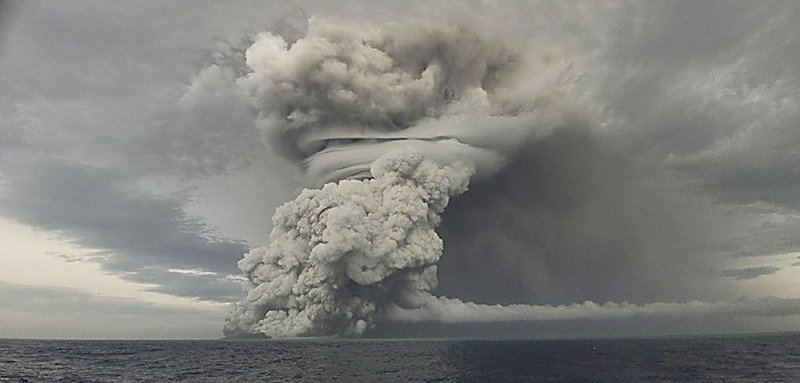
Bij de uitbarsting van de Hunga Tonga kwam daarnaast vooral veel water hoog in de atmosfeer terecht; in de stratosfeer ongeveer 150 miljoen ton [1]. Hierdoor nam in korte tijd de totale hoeveelheid waterdamp in de hele stratosfeer met 10% toe. Water dat onder 10-15 km hoogte terecht komt regent uit, maar water op grotere hoogte blijft daar lange tijd aanwezig en draagt daardoor bij aan het broeikaseffect. Waterdamp reflecteert namelijk de infrarode straling afkom-stig van de aarde en warmt daarmee de aarde op.
Het totale effect van de uitbarsting op de temperatuur op het aardoppervlak is niet eenduidig vastgesteld en kan zowel een lichte toename als afname zijn [5, 6, 7]. In een recente publicatie waarin zowel het effect van de aerosolen als de waterdamp wordt meegenomen wordt geconclu-deerd dat het afkoelende effect door de sulfaataerosolen iets groter is dan het opwarmende ef-fect van de waterdamp. De uitbarsting heeft daardoor de gemiddelde oppervlaktetemperatuur op het zuidelijke halfrond in 2022 met minder dan 0.037°C verlaagd [7]. Een jaar later, eind 2023, was het effect op het klimaat vrijwel nul [10].
Effect op de ozonlaag
Grote vulkaanuitbarstingen kunnen ook effect hebben op de dikte van de ozonlaag en daarmee effect op de hoeveelheid UV-straling die de aarde bereikt. De grote hoeveelheden zwaveldioxide die door de uitbarsting van de Pinatubo in de stratosfeer zijn terecht gekomen hebben de ozon-laag wereldwijd gedurende ongeveer een jaar, dunner gemaakt gedurende ongeveer 1 jaar [8]. De hoeveelheid zwaveldioxide afkomstig van de Hunga Tonga uitbarsting was te klein om op zichzelf een significant effect te hebben op de ozonlaag. De combinatie van sulfaataerosolen en de grote hoeveelheid waterdamp hebben echter wel lokaal effect gehad op de ozonlaag. Metingen hebben aangetoond dat in de pluim van de uitbarsting de ozonlaag 5% dunner werd tussen 25 en 29 km hoogte in slechts een week tijd [9]. Deze snelle afname van de dikte van de ozonlaag is in grootte vergelijkbaar met het effect van de uitbarsting van de Pinatubo, al duurde het effect van de Pinatubo op de ozonlaag wel langer [8, 9].